Sometimes a song you knew from a decade or two earlier takes on a different meaning when you hear it in your current life. Maybe experience has given you a new perspective or insight. Maybe current events cast a new light on that old tune. Or maybe you’re just finally paying attention to it for the first time.
Well, when we looked over some tariffic images from Rochester’s inspiring Hands Off rally at Cobbs Hill followed by a march down Culver Road and Monroe Avenue, we recognized we could provide an eponymous musical bed with our song “Monroe Avenue,” from our 1998 CD, “Play Along With Watkins and the Rapiers.” So we married those images with an unreleased live version of the song performed on the Nov. 17, 1998 Rochester Sessions show on Rochester Institute of Technology’s WITR.
The song was written and sung by founding member Rob Goodwin, who has lived for the last quarter century in Montana. His words still hold true: ”You wouldn’t believe what you can see out on Monroe Avenue.”
Rod Serling created The Twilight Zone anthology television series and hosted 156 episodes from 1959 to 1964. Many years later, Watkins and the Rapiers wrote pop songs about individual episodes of the show. The result is the Singing Serling collection, recorded live in its debut at the Rochester, N.Y. Music Hall of Fame on Sept. 22, 2021, as part of the Rochester Fringe Festival.
Below are plot synopses and song lyrics for each of the episodes represented in the collection, which is available on most streaming services as of Sept. 13, 2024.
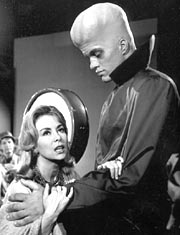
To Serve Man
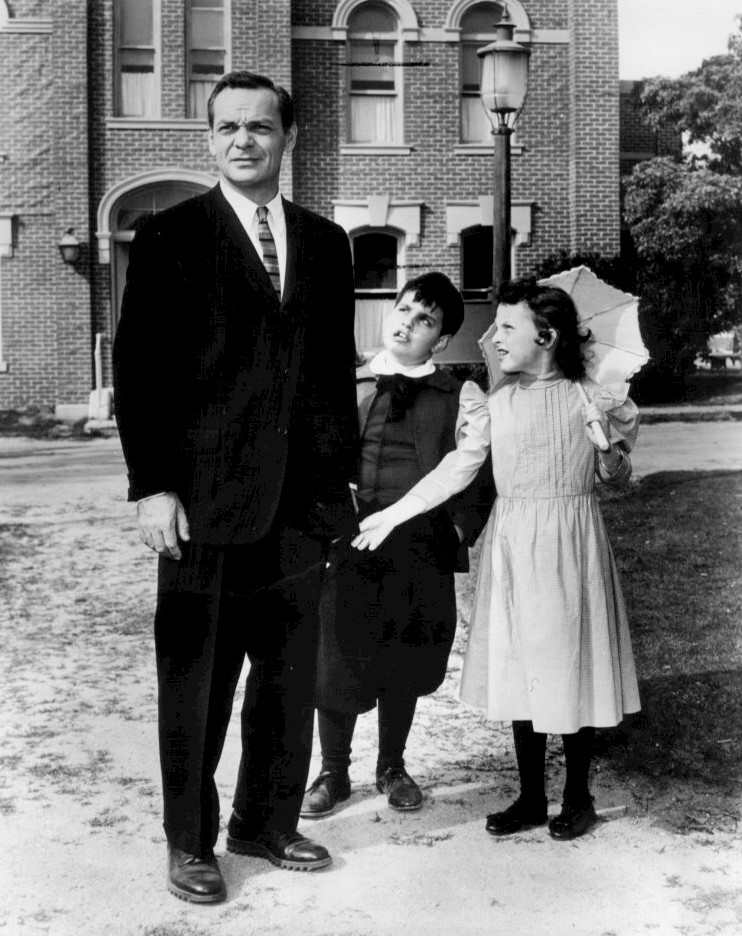
A Kanamit (7’ 2” Richard Kiel) tests the firmness of a free-range human (Susan Cummings).
The Kanamits visit the earth from another galaxy professing a mission to bring peace and prosperity to mankind. They set about improving life on earth and offering people 10-year exchange group visits to their planet. However, one suspicious earthling learns their language and, just as the first flight to their planet is taking off, announced that their book, To Serve Man, is actually a cookbook.
This was the 24th episode of season three, and it originally aired on March 2, 1962.
Parodies of “To Serve Man” have appeared in “The Naked Gun 1 ½: The Smell of Fear,” “The Simpsons,” “Married…With Children,” “Cataclysm: Dark Days Ahead” and the first “Madagascar” movie.
By Steve Piper
Howdy do! We’re the Kanamits I know it sounds like after dinner mints But I wouldn’t give much thought to it ‘Cause you see, we’re only here to serve you
The first two syllables Might make you think we could be cannibals But you shouldn’t be so gullible Cause you see, we’re only here to serve you
Come fly away with us We’ll take you where the air is rarified And you can stay with us And join us for some pie up in the sky
You’re invited to a smorgasbord At the table of the overlords An invitation that can’t be ignored Can’t you see we’re only here to serve you.
We would love to do a fricassee With some members of your family tree And confidentially ‘tween you and me I’d like to say we’re only here to serve you
Come fly away with us We’ll take you where the air is rarified And you can stay with us And join us for some pie up in the sky
Let me have another look at you Why, you’d be perfect at our barbeque Don’t you work yourself into a stew Can’t you see we’re only here to serve you Here to serve you Here to serve you Now
The After Hours
Woman or mannequin is the question for Mr. Armbruster (James Millhoun) as he inspects two versions of Marsha White (Anne Francis).
Marsha White buys a thimble on the ninth floor of an eight-story department store. She gets upset at the sales lady, finds the thimble damaged and seeks redress from the sales manager, but is refused when she has no evidence of the purchase. She rests, then awakens in a roomful of mannequins and slowly realizes she too, is a mannequin, and her turn to live for a month among humans is over.
This was episode 34 in the first season, and it originally aired June 10, 1960.
The episode was adapted as a graphic novel by Mark Kneece and Rebekah Isaacs in 2008.
By Tom Whitmore
Marsha White goes to a department store She takes the elevator up to the 9th floor To buy a golden thimble for her dear old mother There’s but one in the showcase she sees no other She asks the creepy sales lady what might be the price? When she notices there isn’t any other merchandise Can you believe it? Man-o-man I can
The thimble is scratched so she attempts an exchange But the boss-man thinks this lady is acting very strange. He balks at a refund and she goes berserk She passes out right there in front of the clerk They direct her to lie down but when she comes to Everybody has gone home what is she supposed to do? Can you believe it? Man oh man, oh man oh man I can
Wood you like to go on a vacation? Modeling clothes all day can make you very tired. Just a month of good rest and relaxation Be sure to return home before time’s expired
She takes the elevator up past the top floor When the door opens she’s overwhelmed by the roar Marsha, Marsha, Marsha, Marsha, Marsha, Marsha, Marsha Do you remember, Marsha? Do you remember? Early to the next morning we see Marsha again But now she’s in the body of a wooden manikin Can you believe it? Man o man, o man o man, oh man o man I can
Where Is Everybody?
Earl Holliman played astronaut Mike Ferris in this pre-COVID experiment in isolation.
A man finds himself alone in what appears to be a deserted town. Despite finding evidence that people were or had just been there—a ringing telephone, a lit cigar—his terror grows and he panics. The closing reveals he is an astronaut in training, and the town was a hallucination caused in a test of the lengthy sensory deprivation he’ll experience in space.
Serling’s first “Twilight Zone” pilot was rejected. It was his second, “Where is Everybody?,” that earned his show its place on the air. It was the very first episode, and it aired on Oct. 2, 1959.
By Rick McRae
A man walks into a diner, looks around, Sees that no one’s there, so he pours him-self a cup of Coffee, Calls out loud, “Is someone anywhere round Here?” No answer, then he leaves, runs downtown but
Finds out that the streets are empty, but there’s a Funny feeling that he is being watched, but in the Meantime, off he goes, runs to the police station But again he’s all alone. Where is every-
Body (don’t know who I am), Where is every- Body (don’t know who I am), Where is every- Body (In the) Where is every- Body (Twilight Zone)
Cigar smold’ring in an ashtray. telephone Ringing in a booth, and a drugstore book is titled The Last Man On Earth, causing anxiety at- Tack. It’s night time, He goes in, movie theatre
And sees, that a film is playing, Battle Hymn Now remembers he is an Air Force man, he breaks a Mirror, panicking, runs back outside and he’s a wreck He’s hugging traffic light, ”Where is every-
Body (don’t know who I am), Where is every- Body (don’t know who I am), Where is every- Body (In the) Where is every- Body (Twilight Zone)
But look– he’s been in an isolation box, Under observation for several weeks, He’s in the Air Force, pretty soon he’ll be flying to the moon and We’ll hear him crying out, Where is every-
Body (don’t know who I am), Where is every- Body (don’t know who I am), Where is every- Body (In the) Where is every- Body (Twilight Zone)
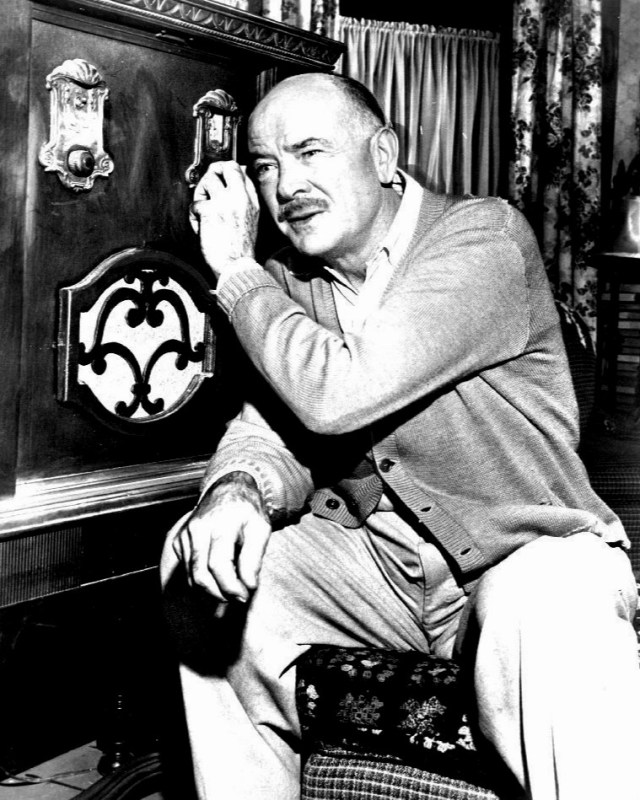
Static
The long-lost big band era makes a brief, Twilight Zone comeback with Dean Jagger as bachelor Ed Lindsay.
An embittered elderly bachelor tunes his radio to live performances by then-dead big band leaders transmitted on a station that’s been out of business for years. When he tries to play it for his boarding house neighbors he just gets static. They think he’s crazy, but in the end, listening to it turns him and his old girlfriend young again, giving him a second chance to marry.
This show originally aired March 10, 1960 as the 20th episode of the second season.
Bob Crane, who later played Colonel Robert Hogan on “Hogan’s Heroes,” played an uncredited role as the voice of the radio disc jockey.
By Kerry Regan with musical theme by Rick McRae
Each evening people gather cordially They sit together watching the TV Seein’ shows that don’t entertain Commercials that wreck your brain And they treat me like I am the fanatic But when I watch their shows I just see static …. static
With my radio tuned to WPDA I hear a Tommy Dorsey Orchestra soiree They play live from Princeton U “Getting Sentimental Over You” Yeah, reception is a little bit erratic And when the gang comes up to hear we just get static… static
The magic of that horn You know I wasn’t born To lose the pleasant glow Of my radio
The magic of that night Vinnie looked just right But that station don’t you know It was closed 12 years ago
Well this one night Dorsey’s comin’ in real clear Vinnie, I say, come quick you gotta hear It feels like we got stung And suddenly we both are young And our dancing steps are downright acrobatic And I don’t care if others just hear static… Static. Static. Static.
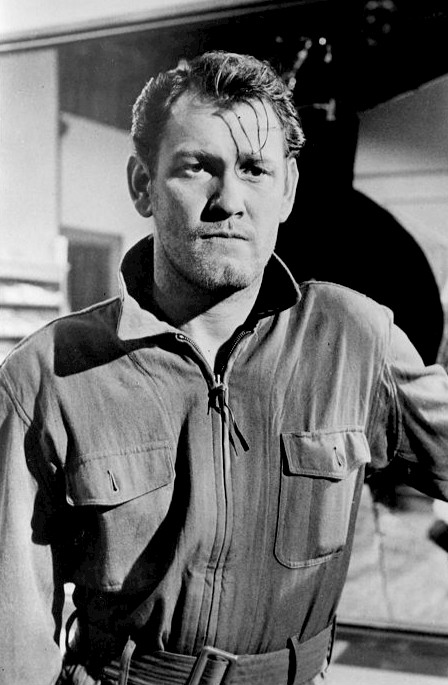
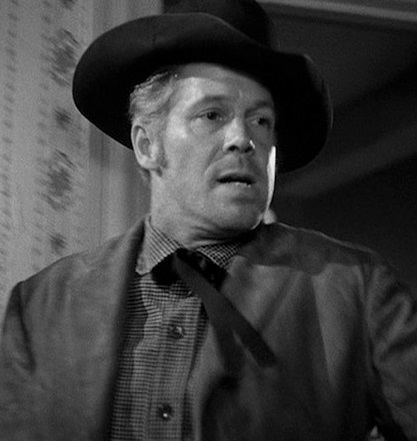
Mr. Denton On Doomsday
Guilt for his victims led the fastest gun in town—gunslinger Al Denton (Dan Duryea) to become its saddest drunk.
Al Denton was the fastest gun in town but guilt over the victims of previous gun duels left him as the town drunk. A salesman named “Fate” helps him regain his shooting touch and reputation, but that attracts a duel-seeking gunslinger. They shoot each other in the trigger hands destroying their ability to shoot. Denton feels blessed that he will never shoot in anger again.
This was the third episode in the first season. It aired originally on Oct. 16, 1959.
Al Denton’s speech about being a top gunfighter until he turned to drink was parodied in Mel Brooks’ comedy “Blazing Saddles”by the Waco Kid (Gene Wilder).
By Scott Regan
I left a boy just sixteen face down in the dirt His life just slipped away with the blood that soaked his shirt Tried to prove he’s fast by chasing after fame Then dying in the street and no one knows his name
The first time I shot a man I had a drink or two To chase away the demons that move inside of you To take away the life of a boy still in his teens A young man with a gun just can’t know what that means
Hey now, hey now. Hey dee di dee die The devil’s on the street – he’s spitting in your eye Hey now, hey now. Hey dee die dee day Whiskey in your veins—time just slips away
I wanted to look proper on the day I die So I got myself a shave and looked death in the eye This young guy with a holster stepped inside the door Quick to the trigger like I had been before
Doesn’t often happen that you get a second chance When it’s time to face the music, time to do the dance That kid didn’t know his luck when he stepped back in the street And they asked “did you get him?” No more than he got me
Hey now, hey now. Hey dee di dee dee There’s a wagon leaving town, no one even sees Hey now, hey now. Hey dee die dee day No one had to die, Fate got in the way
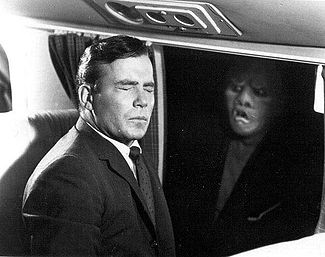
Nightmare at 20,000 Feet
For Robert Wilson (William Shatner of Star Trek fame), this is not what you want to see when you look out your airplane window mid-flight.
On an airplane flight, Robert Wilson sees a gremlin on the wing tinkering with an engine. He alerts the flight crew, but the gremlin hides when anyone else looks, and the crew think Wilson is having a nervous breakdown. He then steals an officer’s revolver and tries to shoot it through the emergency exit. When they land, he exits strapped to a gurney, while the crew discovers a damaged engine.
This was the third episode in season five, and it originally aired on Oct. 11, 1963.
William Shatner also appeared in Twilight Zone episode 43, “Nick of Time.”
By Steve Piper
In a metal box, 20,000 feet Is it real, or just a dream? On the other side, in a window seat No one can hear me scream There’s a gremlin on the wing
With a stolen gun, and a fighting chance I might just save us all But round and round we go, in this fearful dance, And one of us must fall There’s a gremlin on the wing
Is he real? Is he there? Is my mind only taunting me? Is he real? Is he there? Or a dream only I can see
In my monkey suit, do i frighten you? Can you feel the ancient fear? Can you tell me now, I beg of you, is this A window or a mirror? There’s a gremlin on the wing
Is he real? Is he there? Is my mind only taunting me? Is he real? Is he there? Or a dream only I can see
In a mental box, in a stormy sky Where is Jekyll, Mr. Hyde? There is no escape, you may try and try But there is no place to hide When the gremlin’s on the wing Gremlin on the wing Gremlin on the wing On the wing
Here’s to the ones who know what is real And what is just for show Fear is a mask In a funhouse mirror Here’s to those who really know
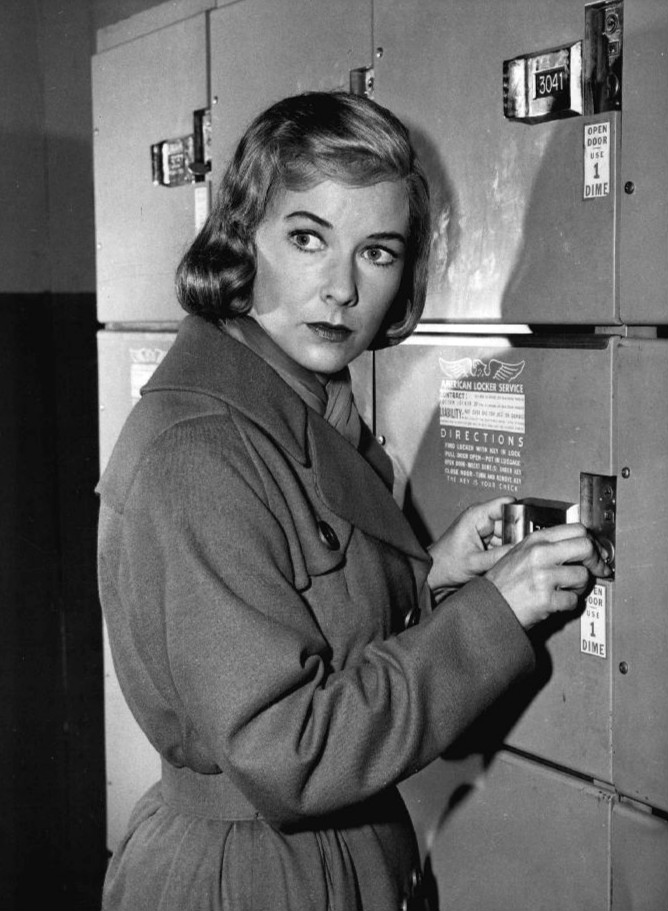
Mirror Image
There’s a one in 135 chance that a pair of complete doppelgängers exist somewhere in the world. Millicent Barnes (Vera Miles) finds hers in The Twilight Zone.
A woman becomes aware that an apparent doppelgänger is with her in the bus station. A man assists her when she faints at seeing her double in her bus and says she believes the doppelgänger is evil and seeking to replace her. Believing she’s losing her sanity, the man has her taken away by police, then is confronted by his own doppelgänger displaying an evil smile.
This was the 21st episode in season one, originally airing on Feb. 26, 1960.
The lead role is played by Vera Miles, a former Miss Kansas who had roles in 45 movies during her career, including Psycho and The Searchers.
The Upstate New York cities of Cortland, Binghamton, Tully and Syracuse all play into the travel plans of the episode’s characters.
By Pete Hasler
On my way to a better day, I’ll hop a bus for a dollar and change The waiting room is ghastly gray, and I’m feeling a little strange People suspect that I’m unfit, and it makes me feel uptight They all act like I’m losing it, and in fact, they might be right I’m staring at the mirror, and I can’t believe what I see It can’t be any clearer, there’s more than one of me
I’m over here while I’m over there, but this ain’t no deja-vu I really could be everywhere, and now it’s happening to you I’m staring at the mirror, and I can’t believe what I see It can’t be any clearer, there’s more than one of me
The Bewitchin’ Pool
When their kids dive into a divorcing couple’s suburban pool, they surface in a freewheeling country swimming hole.
Jeb and Sport Sharewood live in a big fancy house with cold parents who bicker. In their swimming pool, a boy pops up and asks them to follow him underwater. They resurface in a swimming hole where kids play in the yard of Aunt T’s rustic homestead. Jeb and Sport return home, learn that their parents plan to divorce, and then dive back in the pool, permanently returning to Aunt T’s.
This was the final episode of the original “The Twilight Zone” anthology series, episode 36 in season five, originally airing on June 19, 1964.
Back lot noise rendered some of the original audio unusable, so June Foray, the voice of Rocky the Flying Squirrel, dubbed Sport Sharewood’s lines in the outdoor scenes.
The episode was one of the first TV shows to address the problem of divorce and bad parenting.
The Watkins and the Rapiers song was performed in the 2017 If All Rochester Wrote the Same Song program, themed, “How Did We Get Here.”
By Kerry Regan
Handsome Gil Sharewood is a propserous man and a picture of success With a colonial mansion, a glamorous wife, and 2 kids how they were blessed But behind that façade their happiness is a fraud They fought, they argued, they treated their kids cruel So the kids escaped in fantasy at their pool
Jeb and Sport Sharewood imagine they’re poling down a river on a raft A Tom Sawyer-like boy appeared suddenly, “wanna have some fun,” he laughed They dive deep in the pool, and the place they come up is so cool It’s way more fun than their parents would allow And they say Tom Sawyer, you must tell me hoooow
Did we get here? How did we get here? How did we get here? How we can get home again? And Tom Sawyer said You get there the same way that you came in
The next day the Sharewoods tell Jeb and Sport, we have good news to share Our lives will be better, the screaming will stop, and we’ll take trips everywhere We’re gonna set a new course, starting with a divorce Jeb and Sport can’t hide their outrage So they dive deep in the pool and turn the page
Handsome Gil Sharewood stares at the pool, what will he do now? Their kids disappeared, he turns to his wife And he asks her hoooooooooooow
Did we get here? How did we get here? How did we get here? I’ve searched the pool and looked all around the lawn For the life of me I don’t know where they’ve gone
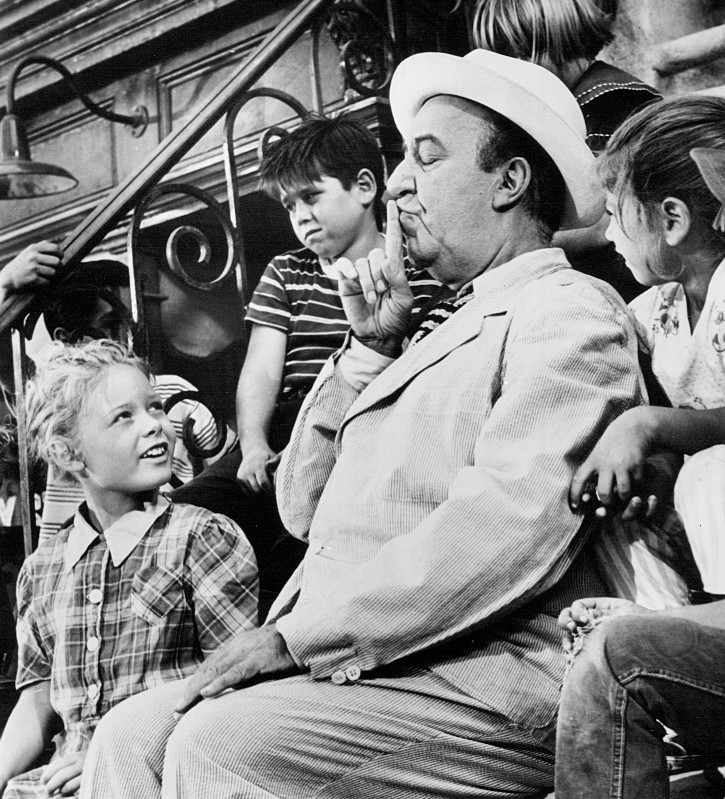
One For the Angels
One of The Twilight Zone’s best salesmen, Lew Bookman (Ed Wynn), takes his best shot at cheating death.
Lew Bookman, a sidewalk salesman, is told by Mr. Death that he will die at midnight. Bookman schemes a way to cheat death, but then learns that a young girl who is his friend will die in his place. Bookman makes his greatest sales pitch to save the girl’s life and in turn accepts that he must be the one who dies. The final reveal: he goes to Heaven.
This was the Twilight Zone’s second episode. It aired Oct. 9, 1959.
Lew Bookman was played by Ed Wynn, who later played Uncle Albert in Mary Poppins. His gravestone reads: Dear God: Thanks…Ed Wynn
By Rick McRae
Mr. Bookman is a salesman with a sidewalk display. His expert sales pitch is so good that he profits each day Along comes Mr. Death Demanding Bookman’s final breath But Bookman begs for one last chance to say “I gotta make one last pitch, I’m talking about a real big pitch One for the angels.”
Mr. Bookman’s pulled a fast one, there’s a smirk on his face. Mr. Death has chosen someone else to die, in his place. With a sudden screech of brakes, Bookman’s realized his mistake A little girl’s instead the fatal case “I’ve gotta save that girl I just have to save that poor girl With one for the angels.” To help this girl to heal I have to seal the deal …with a spiel!
Mr. Bookman starts to reel off his greatest sales pitch. Mr. Death gets mesmerized– he’s now in a spending blitz! When the midnight hour arrives, The little girl survives And Bookman agrees to make the switch. He has done the best he can He will die a happy man He’s one for the angels He’s one for the angels Mr Bookman, he’s a pitchman. It can happen In the Twilight Zone.
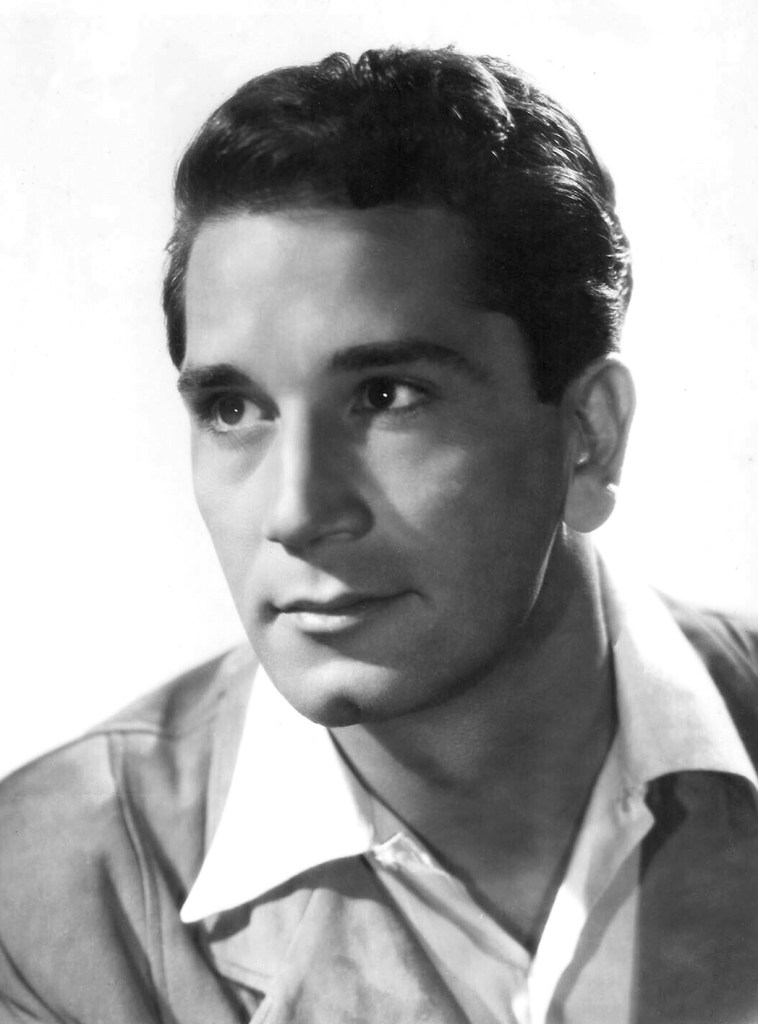
Perchance to Dream
Coffee please! A heart condition makes Edward Hall (Richard Conte) think he’ll die if he falls asleep.
Edward Hall has a severe heart condition and believes that if he falls asleep he’ll die. Yet staying awake also strains his heart. He seeks help from a psychiatrist whose receptionist looks like the carnival dancer who appears in his dreams and lures him to risky places. Frightened by her, he jumps out the window to his death. In reality he died in his sleep on the doctor’s couch.
This was the ninth episode of the show’s first season, airing originally on Nov. 27, 1959.
The title of the episode and the Charles Beaumont short story that inspired it is taken from Hamlet’s “To be, or not to be” speech.[1]
This was the first episode not written by Rod Serling. It was written by Charles Beaumont.
Rod Serling also died from a heart condition, at age 50, on June 28, 1975, two days after heart surgery, at Strong Memorial Hospital, Rochester, N.Y.
By Tom Whitmore
Don’t fall asleep Edward It’s a matter of life or death Don’t fall asleep Edward Or you may’ve drawn your last sweet breath There’s a girl who comes to you in your dreams She’s not so beautiful as she seems Beware of her malevolent schemes And please don’t fall asleep
Don’t fall asleep Edward Though you feel a little woozy Don’t fall asleep Edward It’s time to dump this fatal floozy That heart condition your shrink’s been treating Mere shock will stop your poor heart’s beating This is why I keep repeating Please don’t fall asleep
Don’t fall asleep Edward You’ve heard it all before Don’t fall asleep Edward Or you might wind up at death’s front door The slinky feline is a dancing tease The kind that makes a grown man weak in the knees I will ask you once more please, please, please, please Please don’t fall asleep
Don’t fall asleep Edward There’s something you should know Don’t fall asleep Edward There are eeny meeny many worse ways to go The open window calls to you Mesmerized by this déjà vu What are you supposed to do Please don’t fall asleep
A Stop At Willoughby
The Willoughby that commuting ad exec Gart Williams (James Daly) wants to visit isn’t actually the town he believes it is—it’s a funeral home.
A Madison Avenue ad executive caught up in the rat race falls asleep on his train commute and “awakens” in the peaceful town of Willoughby in 1888. On subsequent commutes this occurs twice more. The third time he abandons the train for Willoughby, but we learn that in fact he has jumped off the train and died, and his funeral home is Willoughby & Son.
This was the 30th episode of the first season, airing originally on May 6, 1960.
The town of Willoughby is said to be modeled after Rod Serling’s hometown, Binghamton, N.Y.
By Steve Piper
Do you long for a yesterday When the sky was always blue And folks you met as you went your way Would know your name and they’d smile at you? Have you had enough of misery And all this pointless strife Do you wish you could just be free To go and find a better life?
Just go down to the station You can come as you are Do you need a vacation? Well, you needn’t look far Everything your heart desires will be there In Willoughby (Willoughby, Willoughby, Willoughby)
Selling cars, selling lawn chairs Selling hope, selling youth Is it giving you nightmares Do you long for the truth? There’s a place of civility You can go there today Leave your sense of futility Lift your feet from the clay
Just go down to the station You can come as you are Do you need a vacation? Well, you needn’t look far And your dreams just might come true In a world that’s bright and new And the pain will all be through When you’re there In Willoughby (Willoughby, Willoughby, Willoughby) Willoughby (Willoughby, Willoughby, Willoughby) Willoughby (Willoughby, Willoughby, Willoughby)
An aging actress is offered a part she feels is beneath her. She rejects it and spends her days watching her old movies. When an acting friend visits, she’s horrified by his aged appearance and disappears in the house. Looking for her in the movie room, her friends play a film in which the actress invites them to a party with her young acting friends of yore—in her current home. She’s now living in her movies.
This was the fourth episode in the programs first season. Its original air date was Oct. 23, 1959.
Martin Balsam played agent Danny Weiss and went on to appear in hit movies “Psycho,” “Breakfast at Tiffany’s” and “Cape Fear.”
Ida Lupino played the aging film star and became the only person to act in one Twilight Zone episode and direct another (“The Masks”).
By Rick McRae
Love for her former self, the Star of the Silver Screen. The Golden Girl of Hollywood, the Legendary Movie Queen She’ll fly into one of her rages; if you ask her what her age is; And seclude herself, in her den. Gazing at movies from her prime, On her 16-millimeter shrine
And I’m her friend and agent, My name is Danny Weiss. The producer wants her acting in his next flick, Would a role as a mother suffice? She screams, I won’t be in it! The meeting lasts less than a minute. She will not play anyone, 0ther than the starring roles that shine On her 16-millimeter shrine.
And then, she had a visit, from her former leading man. Both of them making a comeback film, had been her dream and long-term plan. But she yelled, Get out! Please don’t come closer! You’ve become an ugly grocer! And she ran back to her den, she made a wish, and then She was in the film, looked at me, tossed her scarf it smelled so fine She’s now the 16-millimeter shrine!
Time Enough at Last
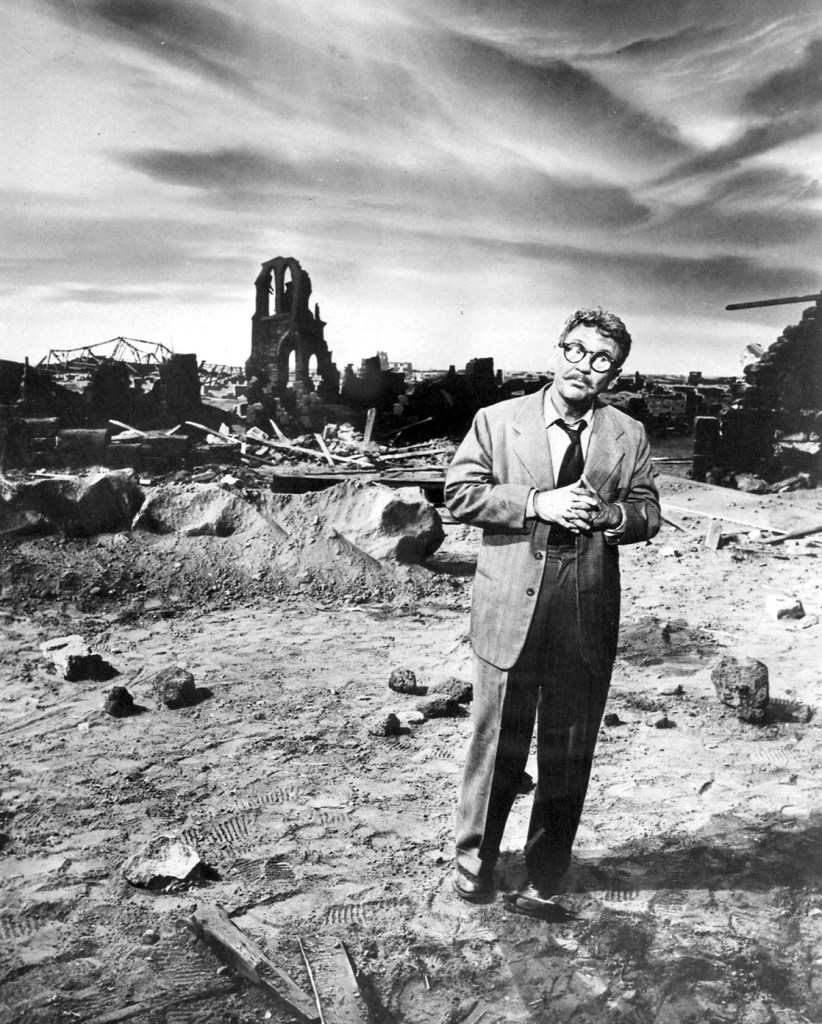
Being an obsessive reader like Henry Bemis (Burgess Meredith) can really be annoying to your customers, boss and wife.
A bank teller is an obsessive reader, annoying his customers, boss and wife. At lunch he reads in the bank vault, protected when a bomb destroys the city. Exploring the ruins he falls into despair, recovering when he discovers the library and its books have survived. With time enough at last for reading, his thick glasses fall off and shatter as he reaches for his first book, rendering him unable to read.
The show was episode 8 in season 1 and originally aired on Nov. 20, 1959.
“Time Enough at Last” was a ratings success, is the most remembered episode in polls, was No. 25 in TV Guide‘s “100 Most Memorable Moments in Television,” and was cited by Serling as one of his two favorite episodes.
By Scott Regan
You only got me, you only got me, Stuck inside this wishing well you only got me I married a fool, and he married me Hiding in his little world of books and poetry But books can be lost, scarred and denied Now you know the cost of the times that I’ve tried
You only got me, you only got me, Stuck inside this wishing well you only got me
I married my gal, and she married me Without much regard of who we might be Just crawled in this cage where the clock beats the day Without turning a page, time slipping away
I saw the world as it was, or it was as I saw Then everything changed, moved outside the law No limits or needs, staring death in the face Even if you succeed, won’t know the end of this race
You only got me, you only got me, Stuck inside this wishing well you only got me Stuck inside this wishing well you only got me
The Night of the Meek
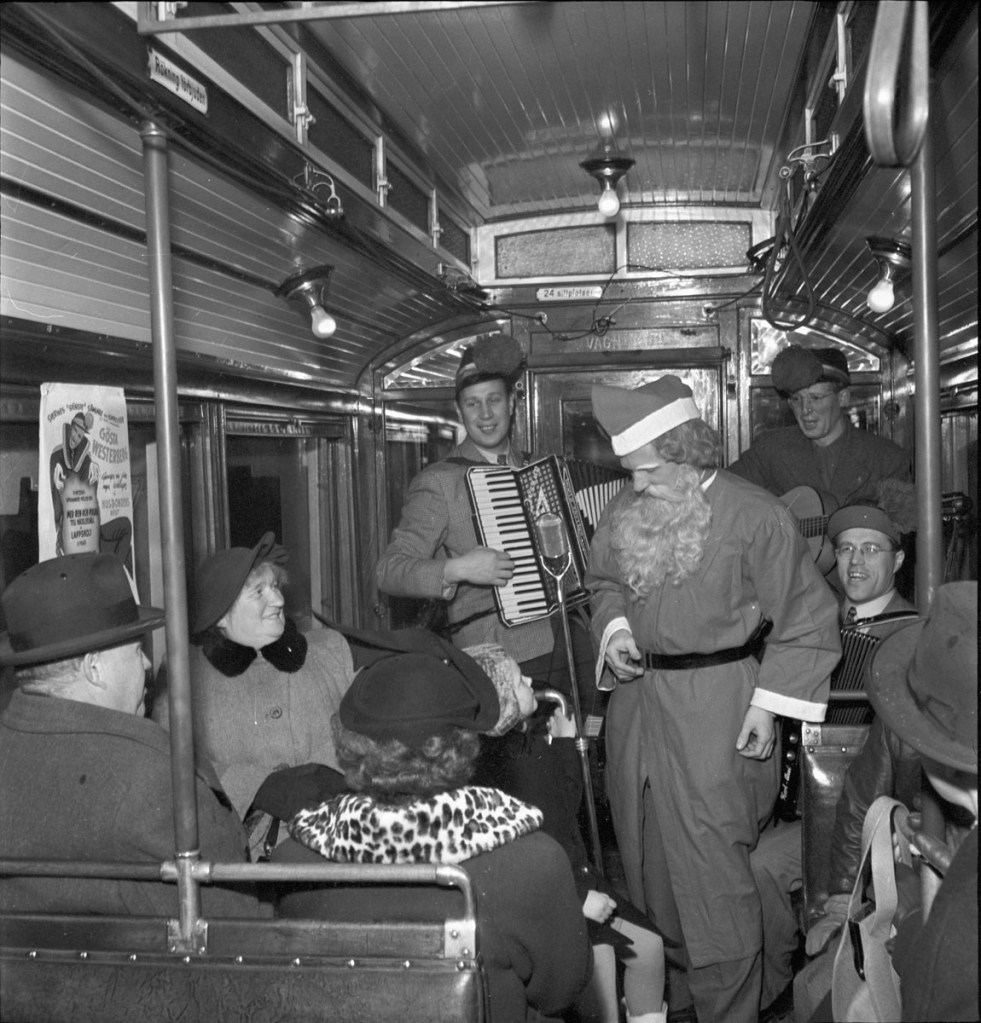
When the meek finally do inherit the earth, Santa’s Workshop will be a key acquisition in the windfall deal.
Henry Corwin arrives for his job as a department store Santa Claus an hour late and drunk and gets fired. In an alley he finds a burlap sack filled with empty cans, and soon discovers the bag produces anything he asks for. He distributes gifts to neighbors and gets arrested for alleged stealing, but is released after producing the brandy his accusers’ request. He rides off in an airborne sleigh pulled by reindeer.
The show was episode 11 in season two. It originally aired Dec. 23, 1960.
Santa Claus is played by Art Carney who played Ed Norton on “The Honeymooners,” and won the for Best Actor Academy Award for his performance in “Harry and Tonto.”
The song also is one of the band’s 100+ original Christmas songs.
By Kerry Regan
Corwin’s over at Jack’s, he’s had six drinks, and his jokes are funny He grabs another bottle and gets kicked out because he has no more money He’s the Santa at the department store He’s late for work by an hour or more He’ll face an angry critique on this night of the meek
So Percival sits on his lap and cries out’ “Santa Claus is loaded” The straight-laced store boss Mr. Dundee looks like his head exploded Corwin makes a speech that’s purely inspired Nevertheless he still gets fired That’s how you end the workweek on this night of the meek
Then in the alley out back Tripping over a sack Corwin opened it up just to have a peak On this night of the meek
Well it turned out Corwin could pull from the sack whatever anyone requested But Dundee figured those were stolen goods so he had Corwin arrested At the station the sack had just cans and a cat But when Dundee asked for brandy it produced that Set your expectations to freak on the night of the meek
Then Dundee looks up in the sky A sleigh with reindeer’s flyin’ by But this Santa looks like that Corwin guy Their throats go dry, they can barely speak On this night of the meek On this night of the meek The meek have inherited the North Pole The meek have inherited the North Pole





 Watkins and the Rapiers